
Rainbow Beach to Double Island Point: 4WD Guide!
If you’re planning a trip around the Sunshine Coast, one of the most iconic adventures you can do is to Four Wheel Drive from Rainbow Beach to Double Island Point. With sandy tracks, stunning coastline, and incredible views, it’s an experience that every off-road enthusiast or first-timer wants to tick off their list.
But here’s the catch, beach driving isn’t as simple as just turning up and hitting the sand. You’ll need to think about permits, tides, access points, and the right vehicle setup before you set out.
Having done the drive ourselves, I’ve put together this complete guide to help you get from Rainbow Beach to Double Island Point. I’ll share everything you need to know to make your 4WD adventure safe, fun, and unforgettable.
This post may contain affiliate links that at no additional cost to you, I may earn a small commission. Please read my disclaimer, T&C’s & privacy policy here.
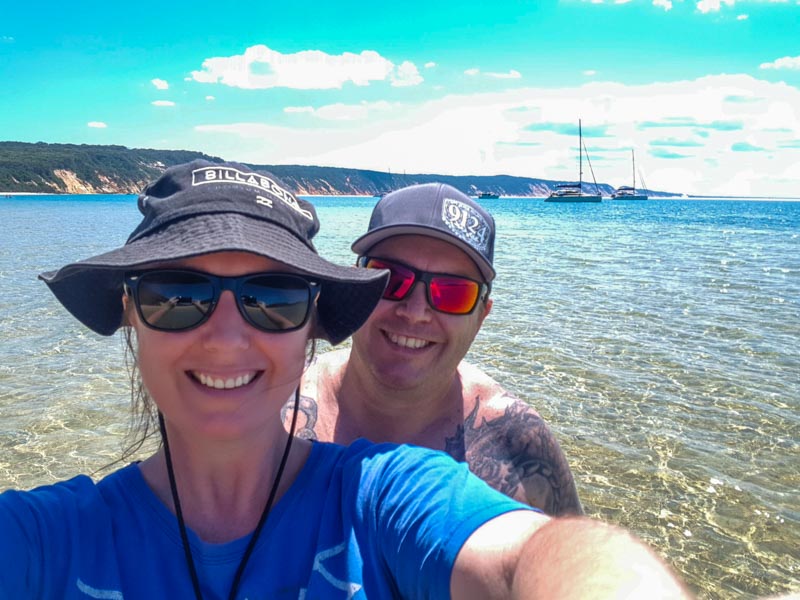
How to 4WD from Rainbow Beach to Double Island Point?
Driving from Rainbow Beach to Double Island Point along the beach covers a distance of approximately 12 km (7.5 miles). The one-way journey typically takes around 45 to 60 minutes, depending on tide conditions, vehicle speed, stops and the specific route taken.
⏱️ Short on Time?
If you’re short on time, here are the basic steps and directions:
- Purchase a Driving permit from Queensland National Parks.
- Exit onto Rainbow Beach via the beach access point on Griffin Esplanade.
- Drive past Mudlo Rocks (check conditions carefully before crossing).
- Pass by the Carlo Sand Blow as you make your way down the coastline.
- Continue along the beach past the stunning Coloured Sand Cliffs.
- Arrive at Double Island Point for views, surfing, and exploring.

From here you can choose to return the same way back to Rainbow Beach, OR to continue the adventure and Four-Wheel Drive Tracks by:
- Taking the Leisha Track through to Teewah Beach.
- Hike and see the Double Island Point Lighthouse
- Continue south along Teewah Beach
- Cut back inland via the Freshwater Track.
- Optional stop at Bymien Car Park, to hike to Poona Lake for swimming
- Continue on Freshwater Track, turn right into Rainbow Beach Road and back into town.
If you need help with directions and navigation, please see this specially pinned map below. It will show you the entire journey detailed in todays post, or you can watch the video for a complete visual overview.

Please Note: if you want to learn about an alternative route, click here for my post on Noosa to Double Island Point, using the ferry and driving north up Teewah Beach. This is using the same Vehicle Access Permit as from Rainbow Beach.
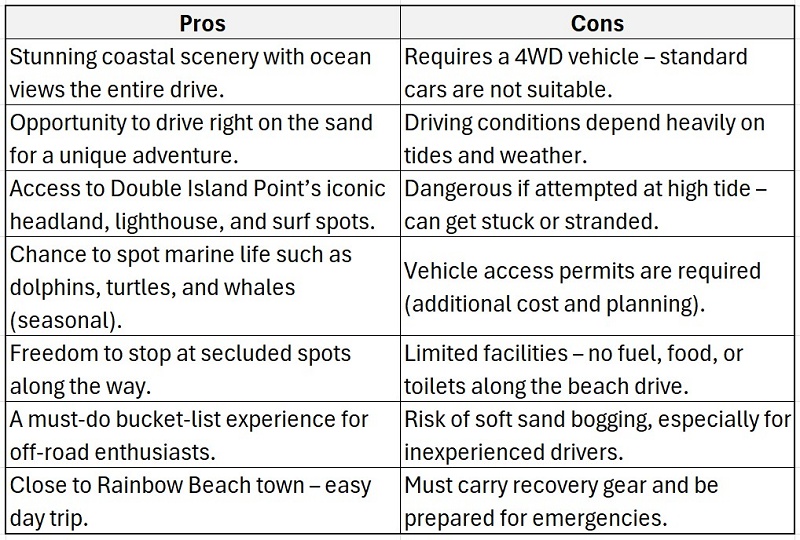

How to get to Double Island Point? (Step by Step Guide)
Step 1. Checking Tides & Purchase Permit
What’s most important about gaining access to the beach in this section, is taking a look at the tide times and only driving around low tide, or coming into a low tide (around 2 hours either side).
Due to weather, winds, or swells, even at low tide, you might find access a little hard, and this was what we encountered a few days earlier when we were supposed to do this 4WD tour.
One you pick the day & time, you will need to purchase a Cooloola Coast Vehicle permit for driving from Rainbow Beach to Double Island Point. This is the same permit for Teewah Beach and driving along the beach to Noosa.
Current prices for this permit are:
- 1 calendar day obtained via the internet = $14.90
- 1 week or less = $38.00
- 1 month or less = $59.80
- more than 1 month (up to 1 year) = $300.90
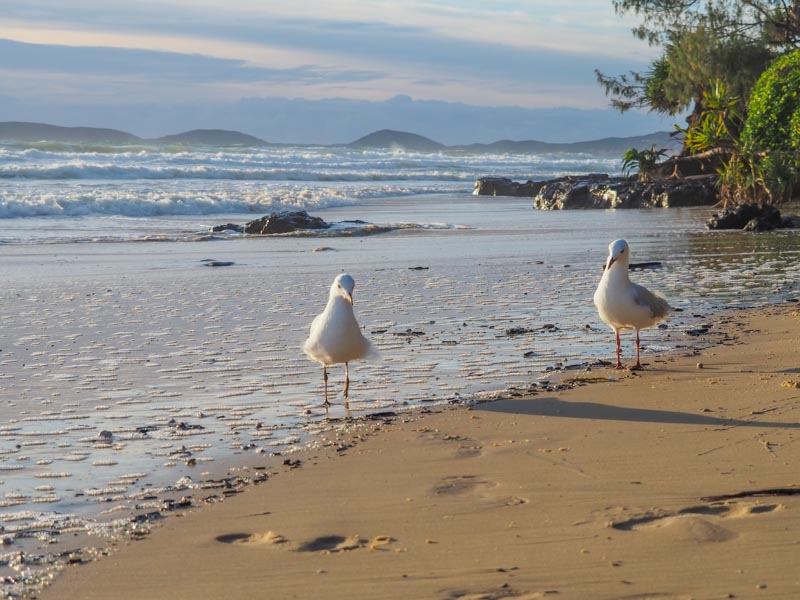
Quite often, you will see cars access the beach and then park up on the edges until it’s safer to go further down.
This means you need to time out your day’s activities, and take into account some of the sections and ensure you don’t get stuck. Believe me that there are cars every month that get stuck with obstructions in the sands and get caught out with the tides.
Today, we didn’t actually enter the beach until 10:30am and the low tide was around 12pm. This means we still had a couple of hours to get around the Double Island Point before the lowest tide was due to pass.
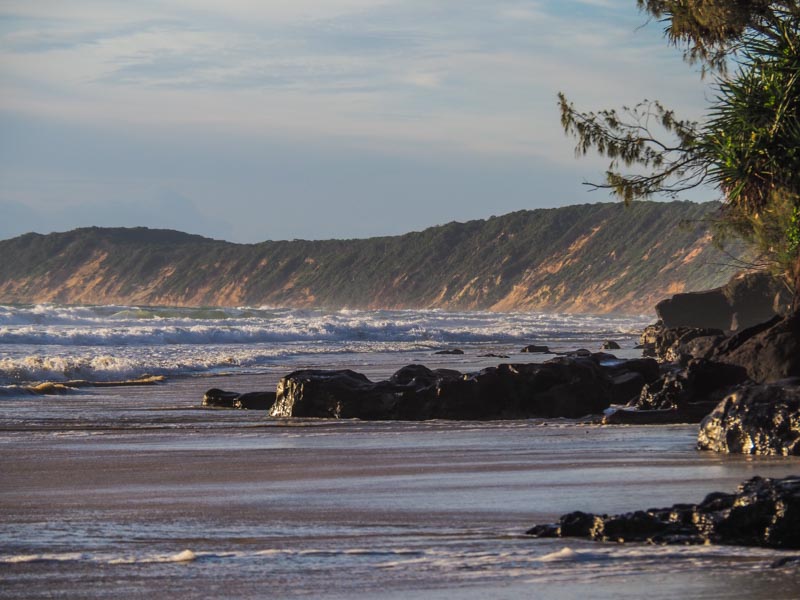
Step 2. Starting in Rainbow Beach
We are starting our 4wd tour today from the Rainbow Beach town centre and making our way to the beach entry parking spot which is located at the end of Griffin esplanade. There is a small car park here with some toilets, walking beach access, it’s even where you’ll find the rainbow stairs.
But for us, this is where we’ll park the car and let our tyres down. The sand we are driving on will be mostly compact, but ranging your PSI between 18 and 22 will be a good start to get over some of the rocks.
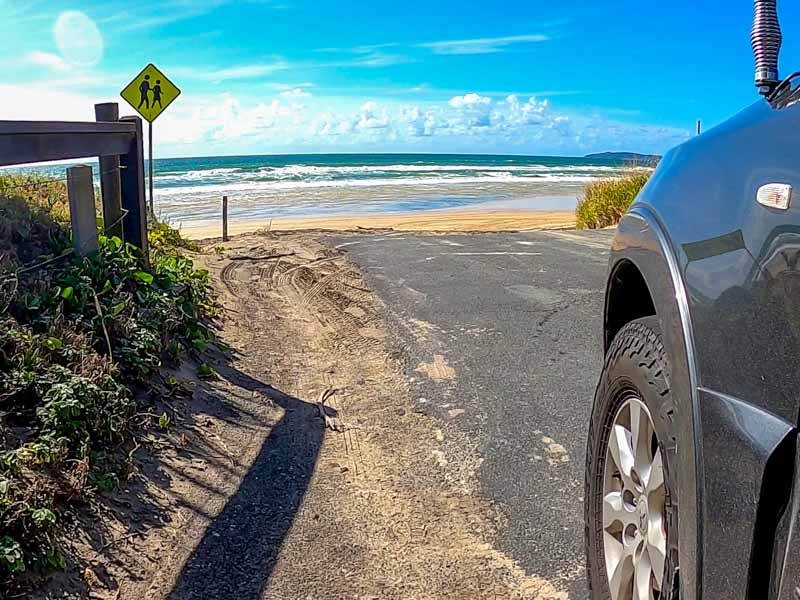
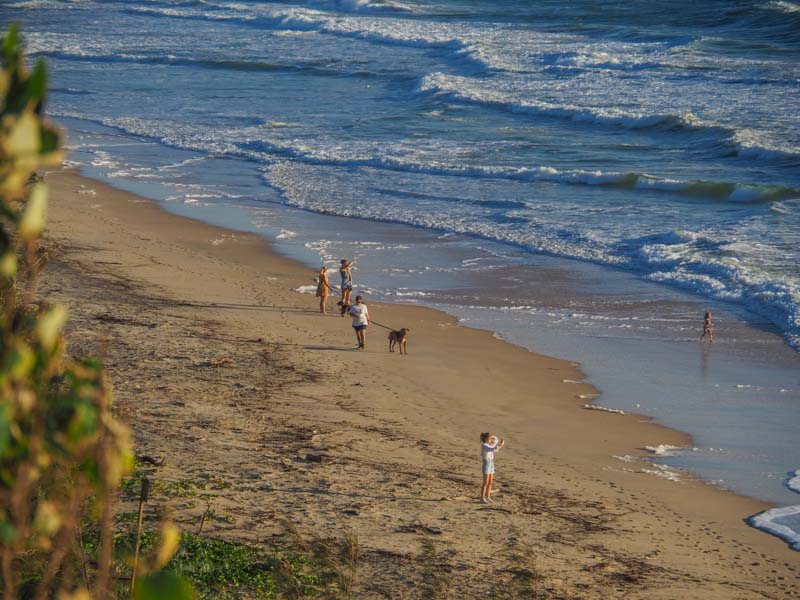
The entry is really easy, and you’ll drive to the right, heading south along the coast. Just know that the left side is walking access only and you’ll find people swimming here.
While Rainbow Beach itself is stunning, there’s so much more to explore beyond the sand and surf. For a full list of must-do adventures, check out my post on the best activities in Rainbow Beach to help plan your ultimate visit.
Do you need help planning your trip to Queensland? Book a one-on-one consultation call with me, to get your questions answered & personalised help!
Step 3. Crossing Mudlo Rocks
One of the hardest sections to get through is what they call Mudlo rocks.
These rocks have been known to catch-out many inexperienced four-wheel drivers over the years, who have lost their vehicles with the ocean tides.
What’s even worse is the daily weather, sand and tides can change this section and make it harder or easier to get through. Therefore what you see today, isn’t exactly going to be what you’re seeing on the day you visit.
As the name suggests, there are hundreds of rocks inconsistently positioned in the sand. Some are small and some a large.
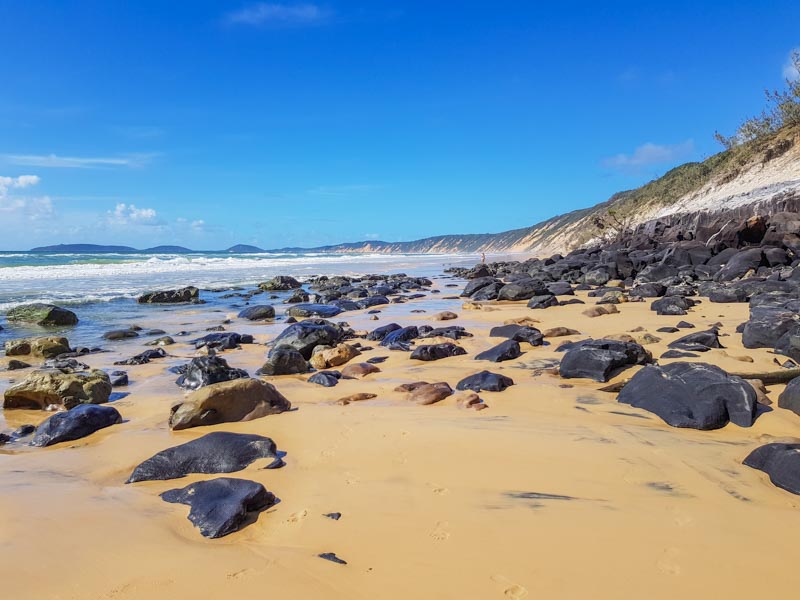
The best way to get a handle on what you’re in for is to stop before the rocks, to assess the situation. This way, you can navigate a “less intrusive” path around the rocks, that have shown up on the day. While also, not trying to submerge your car too much.
To give you some prospective, you could show up a couple of days later and find:
- more sand has been moved from the tide and a lot more rocks exposed.
- The other side is more sand has been brought in from the waves and making it easier.
Honestly, you’re not going know until the day?
As we were a little early before low tide, Matt knew the way he wanted to go, but decided to wait for the tide to go back down a bit. And although we waited, others did still go through.
After a while, Matt jumped in the car and set off through the rocks.

Check out my Photo Gallery Sales Page for sample tourism images needed for websites, banners, magazines articles, Marketing and/or Advertisement’s.

Step 4. Passing Carlo Sand Blow
Next, you’ll be driving past the Carlo Sand Blow!
Although, being that it starts high up from the beach, you won’t notice much of it from the Ground. However, there are sections that will have more clean sand on the hills than others.
If anything, I do recommend walking the sand dunes on another day!

Step 5. Coloured Sand Cliffs
The Coloured Sands or the cliff faces to the beach are what draws many visitors to the Rainbow Beach, especially the four-wheel drivers.
If you’re really keen, you can actually walk to the coloured sands, but please do watch out for the cars. You can even walk as far as you can to double Island Point, before retracing your steps to get back.
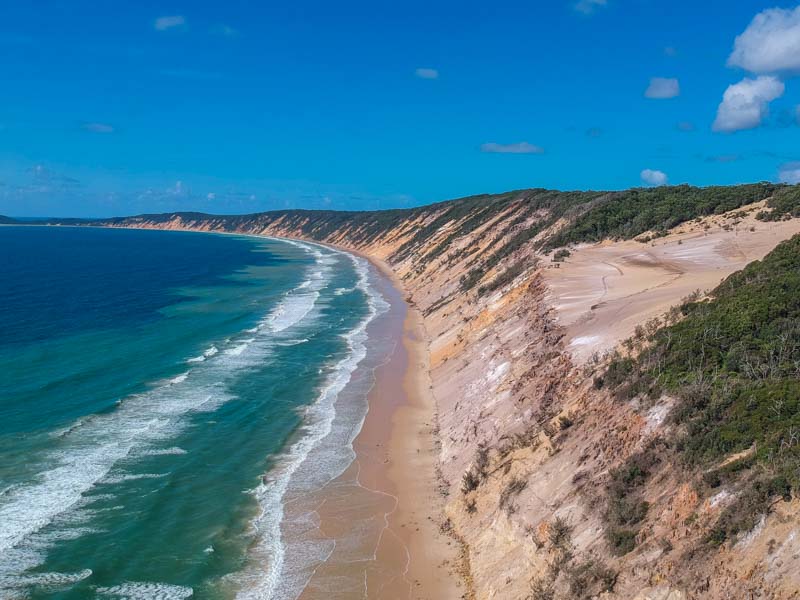
Over thousands of years, iron-rich minerals have stained the sand with colours of yellow, brown, and red. This is all mixed in with the white sand, which has been extracted from all nutrients.
Wind and rain are constantly changing or resulting in these cliffs being known as natural art galleries.

They stretch all the way around to Double Island Point, so there are many different spots you could stop at. You could pitch your awing up and go for a swim, but I would keep an eye on the tides.
However you experience it, It’s your biggest drawcard to the area and for me, a photographer’s dream. But, don’t forget to keep a lookout and watch out for other obstructions along the way.

Note: The Cooloola Great Walk actually starts from the Carlo Sand Blow and walks sections close to the top of these cliffs. If you want to take a different perspective, you could miss the Sand Blow and walk the beach instead to complete the 155 Kilometre walk to Noosa.
Step 6. Watch for any Obstructions
We came to our next obstruction, which was something we weren’t expecting. Excess trees had fallen over the cliffs and landed on the beach.
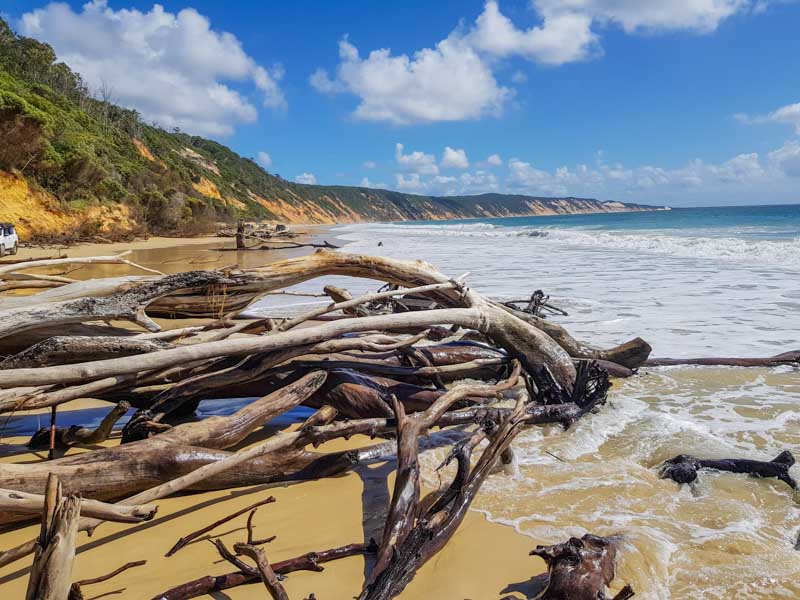
You can see pictured below, that someone had already misinterpreted their access, and the sands have claimed their vehicle. Not sure how long it has been there, but now upside down and all rusted out.
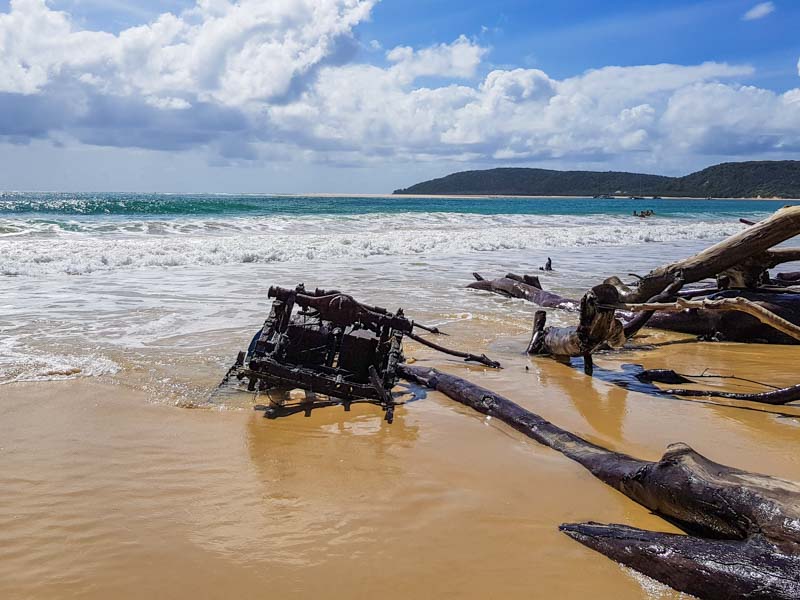
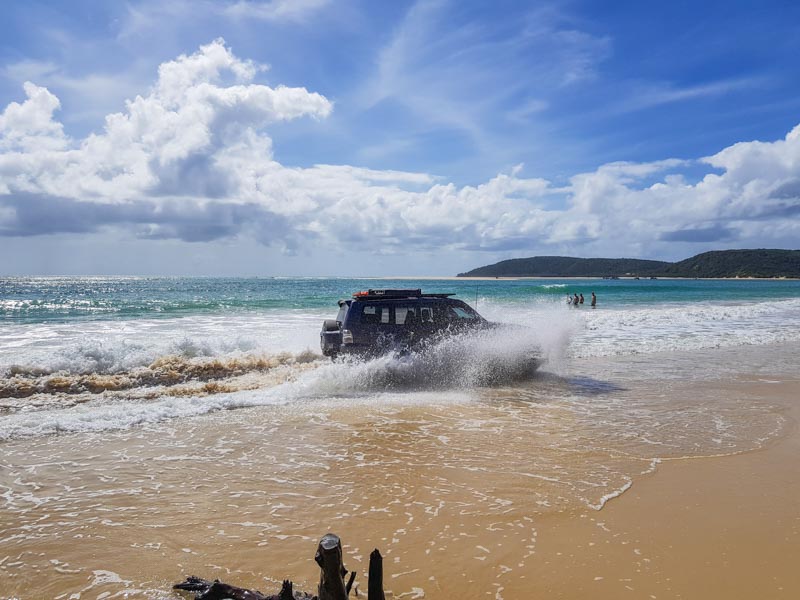
People will try several things to get through, and as we were at the lowest tide, the waves of the ocean weren’t going to recede much more.
We waited here for 30 minutes and watched as several people drove their vehicles through the waters, and timed it as the waves were at their lowest.
Others got a manual hacksaw out and tried their best to pave an inland track over more rocks. Some of the branches of the tree were too big for a manual saw, so it wouldn’t have been easy.
Your third option would be to backtrack the way to came and take the inland Freshwater track route (we use this on the way home), although It will take you longer to get around.
Step 7. Reaching Double Island Point
Double Island Point is a coastal headland along the Queensland coast and a spot many will visit for fishing, surfing, swimming or just getting away from the hustle and bustle of city life.
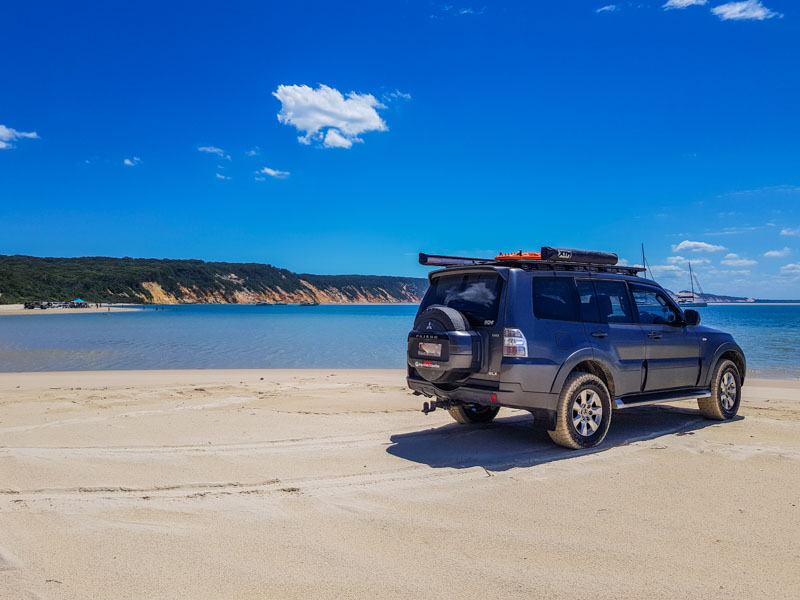
It’s still part of the Great Sandy National Park, which encompasses K-Gari or Fraser Island.
The Views from here will also differ with the tides, and the point could be completely covered during high tides. At low tide, much of the sand bar will appear, and today was used as a late lunch stop-off for us.

We sat around admiring the views and checking out these people learning to surf. It actually looked like fun, and maybe I should give it a go next time.
The sand was dryer in this section and a little softer to drive on – there were many different creeks and streams to get around, but easy to manoeuvre into Leisha track, which is our inland access point to Teewah beach.

Step 8. Crossing the Leisha Track
The Leisha track is only 900 metres long, but your quickest way to get from Double Island point over to Teewah Beach and the lighthouse walk. Both the entrance and exit are fitted with rubber mats to help with traction and to reduce erosion damage.
The track itself is a bit rough, but easy enough and will only take about 5 minutes to get through.
Before you know it, you’ve made it onto Teewah beach. We started by heading to the left and going back to the other side of the double island point. This is where the start of the Lighthouse walk is.

Step 9. Completing the Lighthouse walk
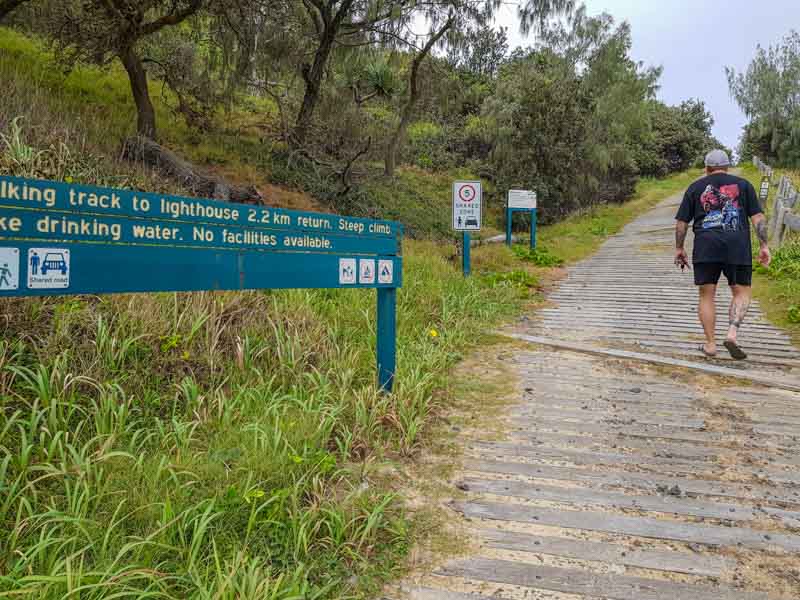
The lighthouse walk is only 2.2 kilometres return, back on the same track. It only took us about 20 minutes to get there, but it was all uphill.
The track was nicely formed, and we found it easy enough in thongs.
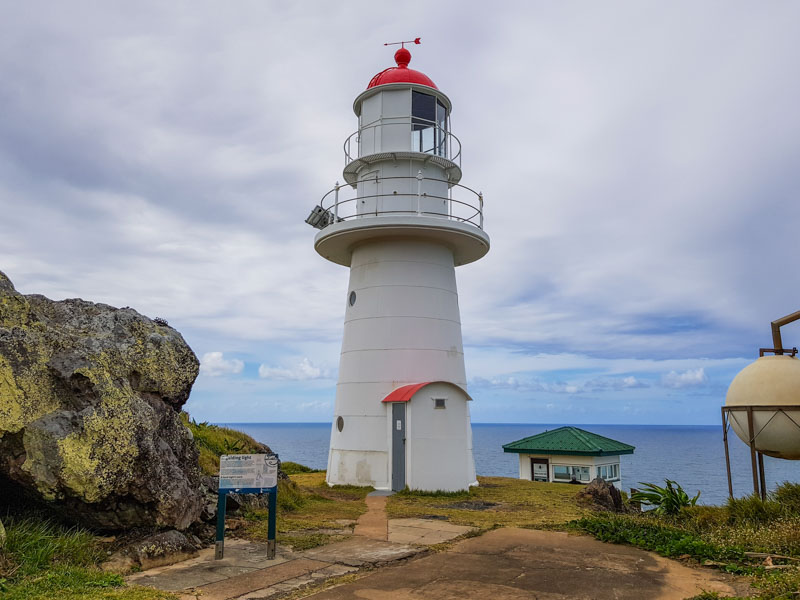
The lighthouse was built in 1884, is relatively small, and made of metal cladding on a timber frame.
You have a few information boards around to read about the history and take in the 360-degree views. We only stayed up there for about 5 minutes, and then about 15 minutes to get back down to the beach.
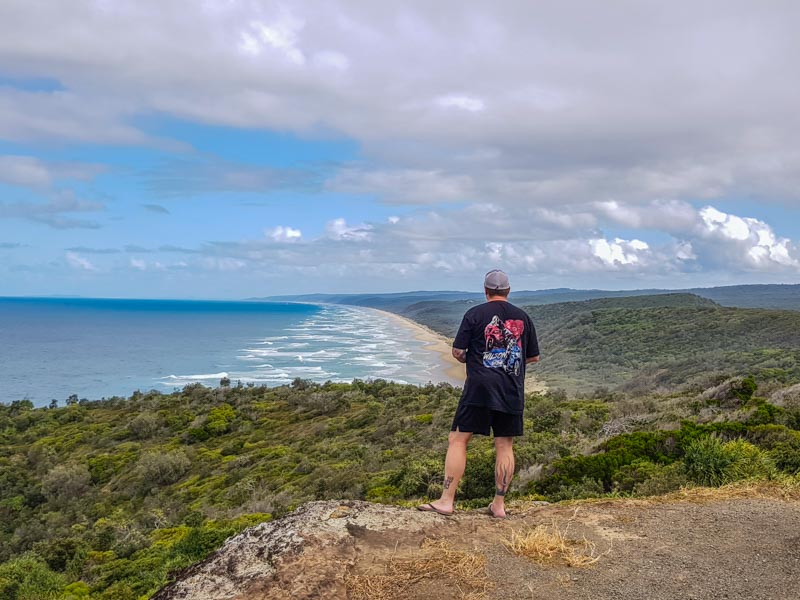
Apart from the lighthouse, you just can’t beat those views and look down Teewah Beach. On a clear day, you can see Rainbow Beach, Fraser Island, and even Noosa.
Step 10. Driving Teewah Beach
There was hardly a soul around, but often people will just find a spot on their own for swimming, fishing or just lazing on the beach.
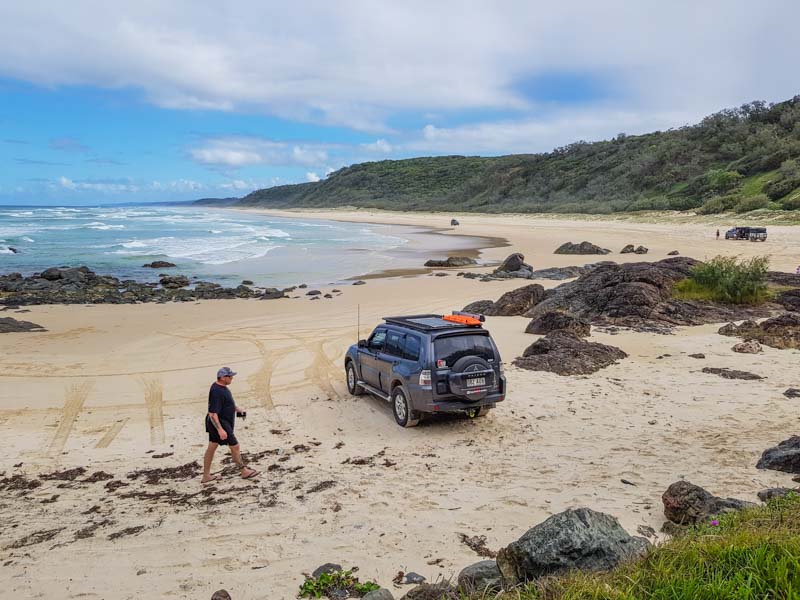
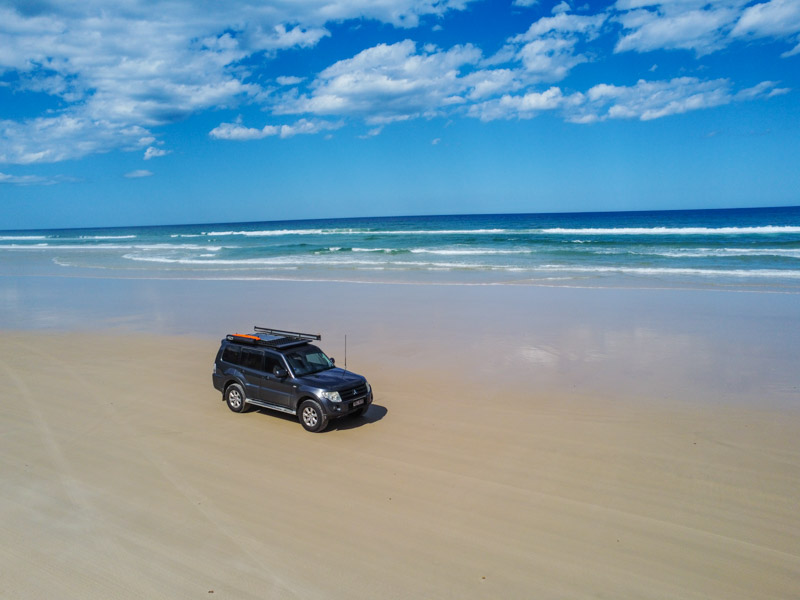
Also, a great spot just to go for a drive.
The water was a little cleaner here today, but after heavy rains, you can expect it to be a little stirred up. This is when you can just sit back and admire the beauty that the Queensland coast can offer.
Step 11. Using Freshwater track
Finally made it down to Freshwater road and passed by One of the National Park campgrounds.
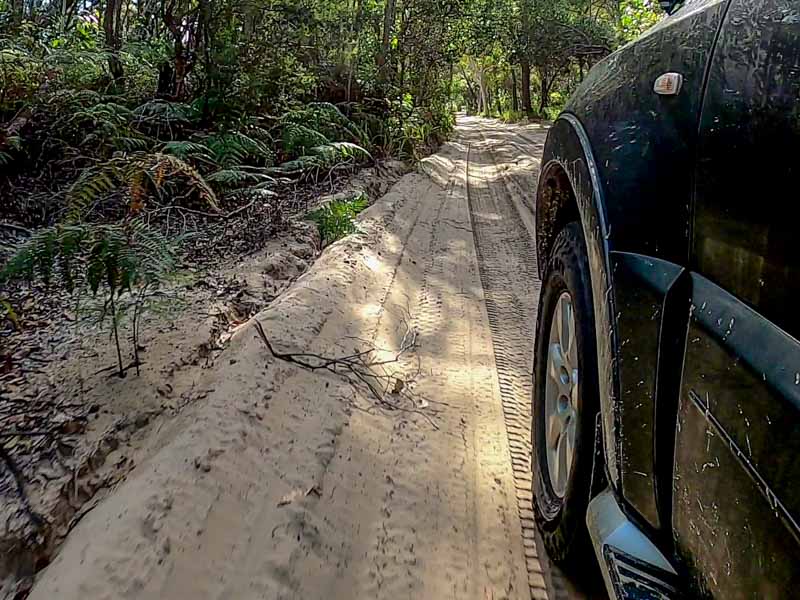
This track is very soft sand, with lots of bumps and holes, and will take some time to get through, especially if you run into other cars going the opposite way.
Most of the track is single lane, so you might have to stop or move into a better position for an oncoming car.
All up it will take about 30 minutes to get through the 15 kilometres of the dirt track. But, it is an experience to see more of the Great Sandy National Park and the rainforest growing in sand.
Step 12. Bymien Car park
About half way through the Freshwater track, there is an optional side trip and stopping at the Bymien Car park. This is where you can hike to the gorgeous Poona lake.
Poona Lake, is a serene freshwater lake tucked within the Great Sandy National Park. It’s a bit of a hidden gem compared to the more famous lakes on Fraser Island, making it perfect for those seeking a quieter escape.

The lake is accessible via a walk from the Bymien Car Park, which takes around 45 minutes along an easy-to-follow trail. The walk is suitable for families and casual hikers, though be prepared for some sandy patches that can slow your pace.
Once you arrive, you’ll be greeted by clear, calm waters surrounded by white sandy shores and dense forest, making it an ideal spot for swimming, picnicking, or just relaxing in nature.
The water is cool and refreshing, and because it’s less crowded than Fraser Island’s lakes, you can often enjoy a peaceful swim with very few people around.

Step 13. Driving back into Rainbow Beach
Before too long we made it back onto the highway and only 4 kilometres from Rainbow Beach. I suggest finishing your 4WD day trip to Double Island Point with a stop into “Salts” café for celebratory drink.

Where to Stay in Rainbow Beach?
Rainbow Beach offers a variety of accommodations to suit different preferences and budgets. Here are some top options to consider:
➡ Compare prices for Accommodation HERE with Booking.com
- Rainbow Sea Resort – For those seeking luxury with a view. Located just a short walk from the beach, this resort offers modern, fully self-contained apartments with ocean views.
- Plantation Resort – The resort features a rooftop terrace, outdoor pool, and BBQ area, Spa Baths, providing a comfortable and convenient base for exploring the area.
- Rainbow Ocean Palms Resort – For a more secluded and luxurious experience. The resort offers an outdoor pool, BBQ area, and is just a short drive from the beach.

Best Time to Visit?
Rainbow Beach is worth visiting any time of the year, thanks to its beautiful coastline, stunning sand cliffs, and proximity to the Great Sandy National Park. That said, the timing of your trip can make a difference depending on your priorities.
For a quieter experience, try to avoid school holidays and long weekends, when the town can get busy with families and tourists flocking to the beach. Visiting during the shoulder seasons often means more space on the sand, easier access to popular attractions, and a more relaxed pace.
Here’s a quick guide to average temperatures in Rainbow Beach by season:
- Summer (Dec–Feb): 21°C – 29°C | Hot and humid, ideal for beach and water activities, but can be crowded.
- Autumn (Mar–May): 18°C – 27°C | Mild and pleasant, fewer tourists, great for walking and exploring the cliffs.
- Winter (Jun–Aug): 11°C – 23°C | Cooler and drier, perfect for hiking, 4WD adventures, and exploring without the heat.
- Spring (Sep–Nov): 16°C – 26°C | Warm and sunny, with wildflowers in bloom, a great time for photography and outdoor activities.

Wrap Up!
Driving from Rainbow Beach to Double Island Point is more than just a 4WD adventure, I think it’s a journey through some of the Sunshine Coast’s most stunning natural landscapes.
Whether you’re a seasoned 4WD enthusiast or a first-timer, the combination of soft sand, tidal crossings, and open beaches makes it an unforgettable coastal experience.
If you’re inspired to plan adventures and want to discover more hidden gems in the area, check out my other Sunshine Coast travel blogs here for insider tips, guides, and must-visit spots.
- Best Day Trips from Brisbane & South East Queensland
- Brisbane at night, Fun things to see and do
- Flinders Beach Camping on North Stradbroke Island (Minjerribah)
- Best Day trips from the Sunshine Coast
- Fun things to do on the Sunshine Coast
- 3 Day Surfers Paradise Itinerary on the Gold Coast
- Gold Coast Vs Sunshine Coast – Which is better for you to visit?


