
Is The Great Ocean Road Worth it? Pros & Cons to Visiting!
Is the Great Ocean Road worth it? It’s a question almost every traveller visiting Victoria eventually asks, especially when deciding whether this famous coastal drive deserves a spot in a tight itinerary.
For many first-timers, the biggest issues come down to time, weather, condition changes and crowds. Know that after visiting this area more than ten times over the years, I’ve realized that it’s an absolutely “Must” for some people , but there are circumstances that can hinder your enjoyment.
So, today, I’ll walk you through the real pros and cons so you can make an informed decision. This guide is written for travellers who want honest advice (not just hype) and by the end, you’ll know exactly when it’s worth the effort, and when you might be better off skipping it.
This post may contain affiliate links that at no additional cost to you, I may earn a small commission. Please read my disclaimer, T&C’s & privacy policy here.

Is The Great Ocean Road Worth Visiting?
Overall, I think the Great Ocean Road is worth visiting for the Limestone Coast (namely the 12 Apostles), movie-worthy beaches like Loch Ard Gorge, wildlife encounters, postcard-worthy photo spots, hiking trails and waterfalls.
Ok, so that’s why I like it, but what about you?
Well, as much as I go into much more detail below, I have my quick reference bullets points on a few Pro’s and Con’s.
✅ Pros of Visiting the Great Ocean Road:
- One of the most scenic coastal drives in the world
- Home to the 12 Apostles and other natural landmarks (Loch Ard Gorge, London Arch, The Grotto)
- You can Spot native wildlife like kangaroos, koalas.
- There is attraction variety’s with rainforests, waterfalls, beaches, and dramatic coastlines
- It’s a known Surf coastline and beach towns.
- Plenty of incredible photography opportunities.
- There are Self-drive Itinerary’s or guided tours available
➡ See Great Ocean tours HERE with GYG, or HERE with Viator.
❌ Cons of Visiting the Great Ocean Road:
- It can be Time-consuming depending what you see.
- There are winding roads, which can cause motion sickness.
- Very popular with tourists and can be crowded
- Weather is unpredictable with wind, rain, and fog can obscure views (and can be freezing cold)
- Tours can feel rushed if trying to do a day trip.
So at first look, I could have you intrigued! If that’s the case, let me go into more detail below, to explain my reasoning.

✅ 13 Reasons why I think it’s worth visiting!
When it comes down to it, If you’re a First-time Visitor, Road trip lover, Photographer, Nature enthusiast, or a beach side vacationer, then I think you will LOVE the Great Ocean Road.
This would be the same for Family’s after cool things to do with the kids, couples after a romantic getaway, or a group of friends out exploring.
But, lets look into why I like to visit!
1. It’s where the 12 Apostles are!
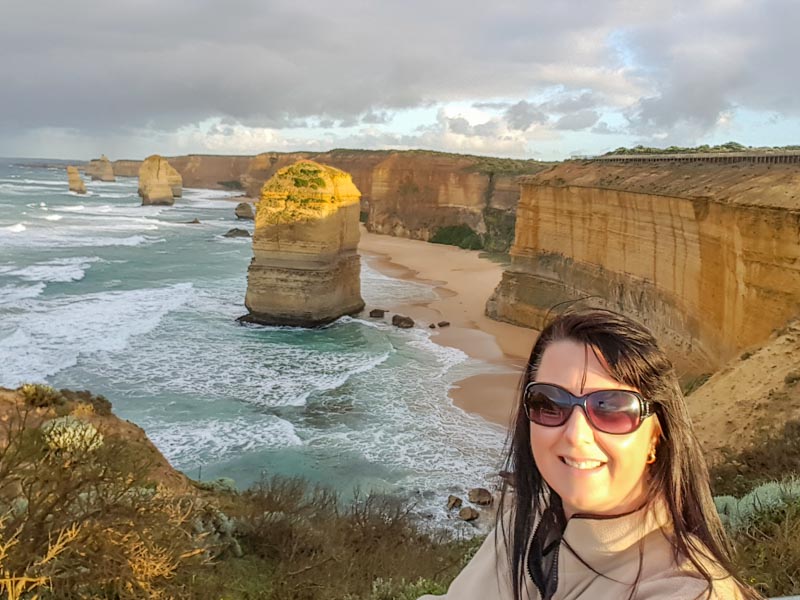
When looking for exciting things to see and do on the Great Ocean Road, you should start with the Port Campbell National Park, where you’ll find the world-famous rock formations, called the 12 Apostles.
This is your ultimate Aussie bucket list item, with a collection of limestone stacks that have been formed and shaped by the elements over hundreds of years.
Bare witness to the immense erosion activity that goes on in this area of Australia. And it’s due to this erosion, I’m sorry, that there are only 8 Pillars left (out of 12), with the last one falling over in 2005.
However, from the standard lookout position, you can only see 2 pillars on your left side and the other 6 on your right.
2. A Scenic Drive in Australia.
The Great Ocean Road is a 244-kilometre coastal road trip destination that stretches from the Memorial Arch, south of Aireys, to Allansford, near Warrnambool (See my Map Here).
It’s situated south of Victoria, along the southern coast of Australia, making it a perfect addition to your road trip from Melbourne to Adelaide!
What makes it one of my favourite scenic drives?
Well, it’s the variety of attractions along the coast like blowholes, beaches, and giant rock formations. As well as top-notch experiences in the Otway National Park, with waterfalls, hiking trails and ancient trees.
Additionally, there are small towns along the way that offer accommodations for the Budget Backpacker, camping sites, and the indulgent luxury style. Or, if you’re like me, I tend to go with something mid-range for comfort and price.

3. It was filmed in a movie.
Most people don’t know this, but if you’re a fan of 80’s films, then “Loch Ard Gorge” was used in “The Pirate Movie” which starred Kristy McNichol and Christopher Atkins.
A musical is not everyone’s cup of tea, but I think walking the same shores as in the movie is kind of cool!
The beach itself got its name from the ship Loch Ard, which was shipwrecked nearby in 1978. Among the 58 passengers of the ship, only 2 managed to survive by swimming to the shore of the gorge.
You can view and access the beach from the top of the rugged cliffs, then down an old wooden staircase. Although it’s possible to swim on this beach, it’s notoriously known for its undertow and rough seas, which may cause dangers to swimmers. Plus, the water temperature is freezing, especially during winter!

Check out my Photo Gallery Sales Page for sample tourism images needed for websites, banners, magazines articles, Marketing and/or Advertisement’s.

4. Day trips from Melbourne.
Although I personally recommend spending several days exploring the attractions along Great Ocean Drive. If you’re strapped for time, you can see its highlights on a day trip from Melbourne.
However, what I mean by “highlights” are essentially the 12 Apostles, the visitor centre and possibly Loch Ard Gorge.
Direct driving from Melbourne City to the Apostles is three hours one way, and that isn’t even using the coastal route. This ends up being a REALLY long day and seeing a limited portion of the Great Ocean Road.
However, if you only have the one day, then I think tours are the best idea if you’re desperate to see them.
So, would I recommend hiring a car for a day trip from Melbourne on the Great Ocean Road? The answer would be a hard “NO.” In this case, I would find a tour more convenient under a strict time schedule, and at least you can sleep on the bus.
Tip: I would recommend joining a two or three day Tour from Melbourne to better utilise your time!

5. There are blowholes
Blowholes are exciting phenomena.
Wind and tides crashing through the rock cavities eventually cause the ocean waters to project quickly in different directions.
If you enjoy watching the intense yet beautiful strength of the ocean, there are blowholes here that produce intense sounds and powerful swell every time a wave passes.
One of the more popular blowholes is the Thunder Cave, which is just a few minutes walk from Loch Ard Gorge. For the best views, you can watch the sheer power of the waves crash against the rocks from atop the cliff.

6. Snap your Instagram moment.
There are limited spots to take photos with the 12 Apostles, but I find the best is from down on the beach.
While there is an unpredictable coastline, the gate are only opened by the park rangers on low tide, where you’ll use the Gibson Steps.

This staircase has 86 steps that will lead you to the beach. This has an incredible and closer view of the two eastern limestone stacks, namely Gog and Magog.
Any pictures seen from the beach of the 12 Apostles, will have been taken from this position. So ensure you check the Low tide times and visit when you’re allowed to get down there.
➡ Find GOR tours HERE with GYG, or HERE with Viator.

7. It has its own London Bridge (..or Arch).
Not far from Loch Ard Gorge is the would-be London Bridge of Australia. It’s an offshore natural Arch that was once called “London Bridge” before it collapsed in 1990, which left two visitors stranded for hours.
Despite this unfortunate tragedy, this natural formation remains the third most popular site along the Great Ocean Road and re-named – the London Arch.
There are a couple of viewpoints nearby where tourists can admire the majestic it’s beauty and watch the rough seas crashing. However, as a popular spot, most of the trails have been paved with a wooden boardwalk.

8. Helicopter tours
One of the best ways to witness this road trip in all its glory is by taking a guided helicopter flight. Especially when you can’t see some of it (or the 12 Apostles in the same photo), unless you’re in the air.
A short 30-minute tour can cover a lot of ground and give an aerial view with commentary on the natural wonders below. This includes the unique limestone stacks, caves, pillars, unspoiled beaches and have incredible memories to share with your family and friends at home!

9. See the Oldest Lighthouse
Aside from natural wonders, you can also find historic sites along the Great Ocean Road. About 1-hour drive east of the 12 Apostles will lead you to the Cape Otway Light Station, which is home to the oldest surviving lighthouse in mainland Australia.
It was built in 1848 and is located on the most southern tip of Australia’s mainland, providing visitors with incredible view of Bass Strait and inland rainforests.
Walking around the lighthouse will allow you to journey through Australia’s past and see up close an old keeper’s cottage, a signal cannon, and a World War I bunker, which is a real treat for those history buffs!

10. Various Small towns to stay in!
Another thing that adds charm to Great Ocean Drive is that it’s surrounded by different small towns where you can take a break and stay the night in.
Each with their own features that cater to different tourists.
➡ Find GOR accommodation HERE with Booking.com
To help choose the best town for you to stay in, here’s a brief overview of them:
- Stay in Port Campbell: A small town with a big city vibe and where I tend to base myself for a night or two. It’s located close to the main sections of the road and is home to several iconic landmarks, like the 12 Apostles rock formations.
- Stay in Apollo Bay: A seaside village that is close to the Otway National Park, offering visitors opportunities to explore through the rainforest, waterfalls, and the Mountain Ash eucalyptus trees. Plus, It’s also popular for its delicious seafood delicacies.
- Stay in Lorne: A resort town for luxury holidaymakers and an alternative to Apollo Bay. People visit here to swim and surf on its stunning beaches. It also has direct access to the Great Otway National Park.
- Stay in Torquay: The surf capital of Australia and also where I start this road trip (even though Memorial Arch is 30 kilometres away). Many tourists stop here for the best surfing and beach swimming opportunities, plus the Surf Museum. About 10 minutes south is Bells Beach, which was used in the filming of “Point Break” with Patrick Swayze and Keanu Reeves.
- Stay in Warrnambool: While it’s positioned after the Great Ocean Road, it is famous for Whale Watching and your first major locality since starting the road trip.

11. National Parks and Hiking
Aside from the incredible coast, the Great Ocean Road is also a gateway to some of the beautiful national parks. This includes Port Campbell National Park and the Great Otway National Park.
The Port Campbell National Park ventures past most of the attractions already mentioned in today’s post. On the other hand, the Great Otway National Park is further inland and boasts a vibrant 1000-square-kilometre ecosystem.
It’s home to diverse species of plants, birds, marsupials, and other wild animals. More than anything, it’s frequented by tourists for its scenic trails that lead to stunning waterfalls and lush rainforests.
I managed to fit a couple of hikes into Erskine Falls and Triplet Falls, which were both magnificent.

12. Take the Tree Top Walk
There’s also the exhilarating Otway Tree Top Walk further in the hinterland region of Victoria. It’s a 600-metre-long and 25-metre-high steel walkaway that goes through and above the lush rainforest of Otway Forest Park.
Walking this suspended trail is great for tourists who want to take a leisurely stroll while soaking up the beauty of the diverse flora and fauna species around the area.
There are several lookout platforms along the way where you can take aesthetic travel pics of the family. Plus, the swing bridges, Spiral Tower and suspended pathways in between, add fun and thrill to the walk!

13. Aussie Wildlife
You’re in the great outdoors of Australia, so it only makes sense that a lot of wildlife can be found in several corners and areas along the way.
Kangaroos can be spotted anywhere, but probably more likely in the early mornings, feeding in large grassy paddocks.
If you want to spot koalas, you can join the Kennett River Koala Walk, which is between Anglesea and Apollo Bay. This will take you to the small community of Kennett River, where you can see cute and friendly koalas hanging on the trees.
On the other hand, you could find other varieties like birds, lizards, wallabies, echidnas, platypus, glow worms, birds, seals, penguins and even the occasional migrating whale.

❌ 5 Reasons When it’s NOT worth it!
1. You don’t have enough time.
Personally, I recommend that you explore Great Ocean Road for three or more days. This will give you enough time to visit all the amazing attractions in the area, get around the excess traffic, and time things around the weather, crowds, and tides.
You know, even the difference between daytime and nighttime settings can be an experience on its own. And obviously, this is something you won’t be able to get on a day trip, especially from Melbourne!
2. You don’t like road trips.
Not everyone is a fan of Road Trips, as they involve constantly moving and frequently stopping to see the sites along the way.
Truthfully, it’s a very different experience to sitting by the pool with a drink in hand, and it may not be for everyone.
I do find some frustrations along the Great Ocean Road (some of which I mention below). However, setting those aside, I honestly believe the pros and unique attractions completely outweigh the cons.
In the end, I think you should try this road trip at least once to see what it’s like.

3. Traffic annoys you.
As with any popular area and tourists itching to get from one site to another, it can bring the extra traffic. Additionally, there are locals towing caravans, backpackers in their campervans, and slower drivers holding up the roads.
Especially during the peak summer season in December and January.
Also consider the smaller towns servicing the area, such as Port Campbell, Lorne and Apollo Bay. I can be harder to park up by the beach, or stopping off for supplies at the local grocery store.
My best advice would be to go with the flow and try not to let it ruin your holiday. You now have the expectations, and I would definitely leave a little extra time in between locations.

4. It can be cold and windy.
Victoria is located in the southern area of Australia and is notoriously known for its cold and windy weather (most the year round). In fact, Melbourne itself is common for inflicting four seasons in one day on its residents, and it is hard to plan what clothes you need.
Add on the gusty winds from the cliff edges along the Great Ocean Road. Then, you have a recipe for chills cutting through you like ice, which can make for a very unenjoyable experience.
I would always prefer to visit in summertime, but there can be a rare occasion when a calm, sunny winter day is better. In the end, I would always pack layers and big, thick jumpers and lets hope that it’s not raining as well.
Note: Just so you know, rain is not exactly your friend for a Great Ocean Road Trip, and I would certainly deter any first-timer from doing it during rainy weather.
5. The twists and turns
Not sure how you feel about the constant twists and turns along any road. But I’ve found I’m probably more affected by it on this road trip.
Therefore, you have two options:
- If you get car sick easily, avoid this route at all costs.
- Or take an alternative route to bypass the curvy sections.
Know that the windy roads can possibly be more dangerous (especially in the rain)and why it tends to slow people down.

Do you need a car?
A self-driving road trip along the Great Ocean Road would always be my first option. Therefore, If you don’t have your own car, I would always hire one from Melbourne Airport or one of the applicable depots.
➡Find your favourite brand & compare prices for your Rental Car HERE
The roads are all sealed, and you can get away with hiring the cheaper two-wheel drive standard vehicles. Although, please consider the comfort levels with how many people you’re driving with, along with the luggage room that you need.
The V/Line Public Bus Transport service operates to and from coastal towns and surrounding hinterlands along the Great Ocean Road. You can catch these buses at stations like Geelong, Torquay, Apollo Bay, Lorne and Warrnambool. However, these buses service the towns and NOT the attractions along the Great Ocean Road , mentioned today.
Also, know that walking will be too far and take too long!

Where is the closest Airport?
The closest airport to the start of the Great Ocean Road is Avalon Airport (near Geelong). It’s only 45 minutes from Melbourne CBD.
You can catch a direct domestic flight to this airport from Sydney, Adelaide, and the Gold Coast via Jetstar.
Your alternative to that is Melbourne Tullamarine Airport! This has an international Terminal and many more times and services to choose from.
I recommend staying somewhere close by for your first night, before embarking on your road trip the next day.

Best time to visit?
The only aspect that would stop me visiting the Great Ocean Road would be the rain. Therefore, I would give any time of year a go, as long as the sun was shining bright.
However, visiting during the Summer (December to March) provides tourists with a more tolerable climate and warmer beach waters. But also know this is the high season and when the crowds will be around.
Just to give you some prospective throughout the year:
| Season | What to Expect |
|---|---|
| Spring (Sep–Nov) | Waterfalls flowing, wildflowers blooming, fewer crowds, which has a great balance of weather and nature. |
| Summer (Dec–Feb) | Warm weather, best beach days (Can still be cold), but also most crowded and expensive. |
| Autumn (Mar–May) | Quieter roads, pleasant temps (but temperamental Wind and rain), and relatively good conditions for sightseeing |
| Winter (Jun–Aug) | Coldest time of year and worse when it’s wet, but best time for whale watching and fewer tourists |

Wrap Up & Read More!
To sum up, I think the Great Ocean Road trip is 100% worth completing, and you should see it at least once in your lifetime. So, if you have a few days free, are looking for unique natural wonders, and enjoy the beach and forest settings.
I think this is the road trip for you!
I hope this blog has helped you decide, but if you need more help with your holiday trip planning, please check out my other Victoria travel tips and guides.


