
Magnetic Termite Mounds, Litchfield National Park, Northern Territory
If you’re planning a trip through the Northern Territory, chances are you’ve heard about the Magnetic Termite Mounds in Litchfield National Park. These fascinating structures, stand tall across the savannah and are one of the park’s most unique attractions.
But here’s the thing, first-time visitors often wonder if they’re really worth stopping for. The mounds aren’t just piles of dirt; they’re an incredible natural wonder built by millions of termites with remarkable precision, perfectly aligned north to south to keep the colony cool in the harsh Top End heat.
In this post, I’ll share everything you need to know about visiting the Magnetic Termite Mounds in Litchfield National Park, from what makes them special, how to find them, and tips for getting the most out of your visit. In the end, it will help you appreciate why these termite-built formations are one of Litchfield’s most iconic sights.
This post may contain affiliate links that at no additional cost to you, I may earn a small commission. Please read my disclaimer, T&C’s & privacy policy here.

Where are the Magnetic Termite Mounds in Australia?
Litchfield National Park is located about 1.5 hours south of Darwin (please see location Map HERE), in the Northern Territory. You have the choice to drive in through the eastern entrance or the Northern Entrance, both available on Litchfield Park Road.
Make sure you visit both the Cathedral & the Magnetic Termite mounds, this is about 17km from the eastern edge of the National Park. Conveniently, there is a boardwalk where you can wander around the mounds and learn more about the structures and the termite inhabitants.
Note: Using the eastern entrance will allow you to see the Magnetic Termite Mounds first before going deep into the park. But, if you use the northern entrance, the Termite Mounds will be at the end of your journey.

What makes them Magnetic?
Magnetic termite mounds, found in northern Australia, are fascinating because of the way they’re built. What makes them “magnetic” is not that they contain magnetic material, but rather their orientation.
The termites construct these tall, thin mounds so that the long axis runs north to south, almost perfectly aligned with the Earth’s magnetic field.
This clever design acts as natural air conditioning. By orienting north–south, one side of the mound is always shaded, while the other gets sun, helping to regulate the internal temperature for the colony.
In the hot Top End climate, this means the termites can keep their environment stable, protecting their fungus farms and larvae inside.
The entire structure of the actual mound can be complicated. In Fact, there’s an extensive system of tunnels and conduits that serve as ventilation for the underground portion. Termites will construct shafts leading down, and the mound is built above the nest.
In particular, they are created very tall and wedge-shaped. The system of tunnels helps control the climate inside and can regulate temperature, humidity, and gas distribution.
The Cathedral Mounds stand about four metres high, which can be taller than the two-metre Magnetic Mounds.

How strong are the Mounds
Termite mounds are firm structures, but also porous. This is crucial for ventilation without affecting the nest’s temperature and humidity levels. The secret of this balance of solid strength with porosity lies in a two-layered architecture:
- A dense core provides strength and stability.
- A porous shell surrounding the core allows ventilation.
Termite saliva does not contribute to mound strength but does increase the mounds weatherproofing and the resistance to rain erosion.
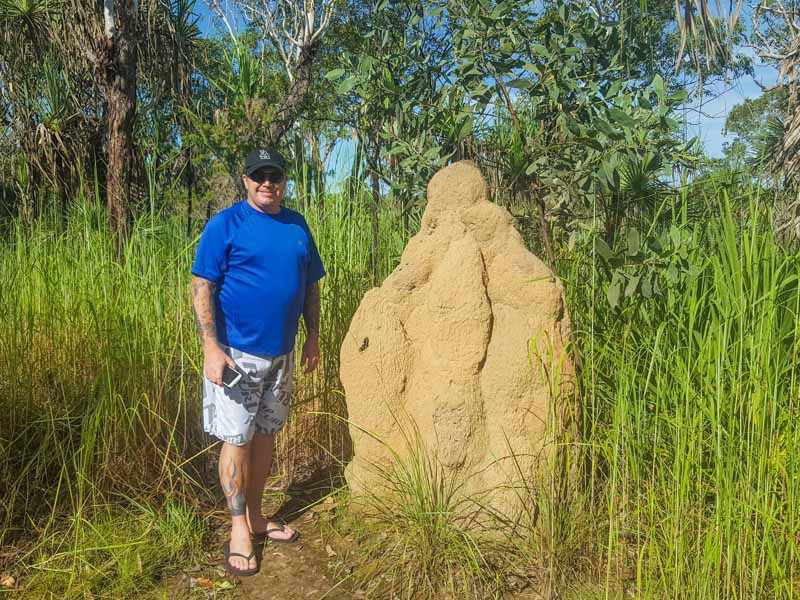
What are Termites?
Termites may look like an ant, are often called “White Ants”. But, they are in fact, insects, and recent studies have found them evolving from cockroaches.
However, like the ant, they divide as workers and soldiers in their colony. They feed on dead animal material and cellulose (wood, leaf litter, soil, or animal dung).
Additionally, they have fertile males called “kings” and one or more fertile females called “Queens”. You will find they are among the most successful groups of insects in the world that have colonized most of the landmasses.

Furthermore, the colony can range in size from a few hundred to several million, with Queens having the longest known lifespan between 30 to 50 years.
Besides that, they have pale brown to white bodies with a darker head and have no waist between the thorax and abdomen. The antennae have bead-like segments and the soldiers or workers never develop wings, are blind, and have thin skin.
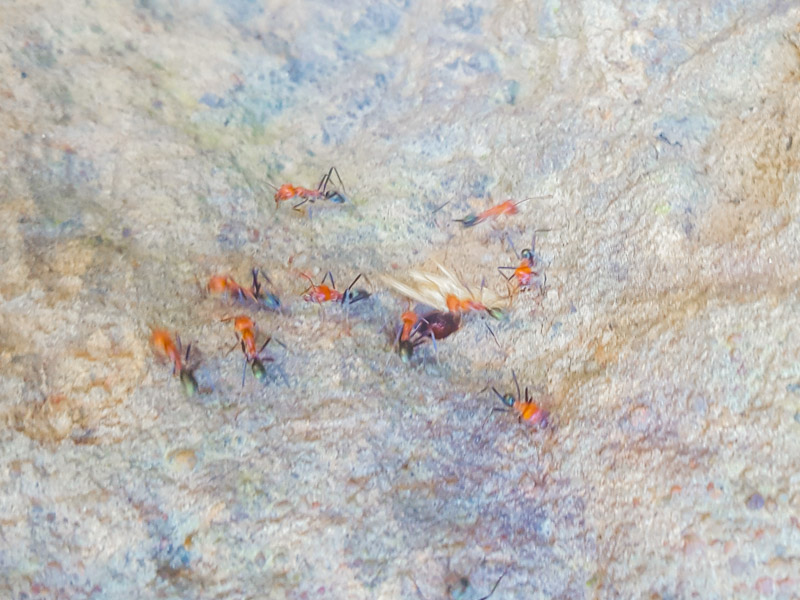
Are the Mounds Dangerous?
Termites can cause severe damage to any homeowner, having eaten through wood portions of the structure. Over the years, this has given them an awful name, and most try to avoid it. Although, viewing these mounds is not dangerous and can be inspected closely without concern.
But, this also means adhering to the cardinal rule of “look but don’t touch“.
Additionally, the structures should be left in the same condition as you saw it. Do not damage, dig, or try to find the Termite or tunnels inside. Something I’ve also witnessed is placing clothing or articles on the mounds, like marking your territory. Therefore, this can affect the well-being of the inhabitants and the climate inside.

Check out my Photo Gallery Sales Page for sample tourism images needed for websites, banners, magazines articles, Marketing and/or Advertisement’s.

Interesting Facts about them!
- Nests are formed in either trees, underground, or in soil mounds.
- The Colonies maintain high humidity in the mound to stop drying out the workers.
- Mounds temperatures range from 25 to 36 degrees Celsius.
- The shape of the nest is specifically designed to regulate temperature.
- Termites undergo three developmental stages – Egg, Nymph & Adult.
- Colonies are formed when the winged species leave their original nest and take flight to other areas.
- They are rich in iron, calcium, protein, fatty, and amino acids, making them a highly nutritious food.
- The largest termite colony ever recorded contained over three million!
- Colonies spend a great deal of time grooming one another to prevent disease.
- When soldier termites sense a threat, they tap or bang their heads against the colony’s tunnel walls. This creates vibrations to warn the rest of the colony.
- Some Queens can lay 15 to 25 eggs per minute.

Where else can you find Termite Mounds?
Surprisingly, there is a difference between Termite Mounds and Magnetic ones. In fact, termite Mounds can be found all over Australia and are more common in the Outback Regions.
With our many treks through Outback Queensland, we’ve encountered many different termite mounds – Big, small, round, and thin.
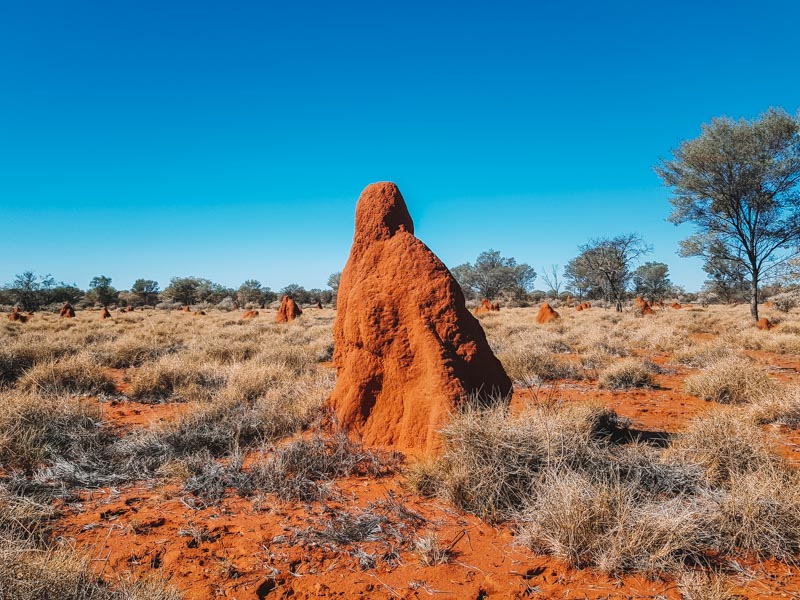
However, about two hours south-east of Darwin, you have the Kakadu National Park. Cathedral Mounds can also be seen here in the southern part of this National Park, along with the other incredible sites.
One of the best places to see them is along the Maguk Road in the Mary River region.
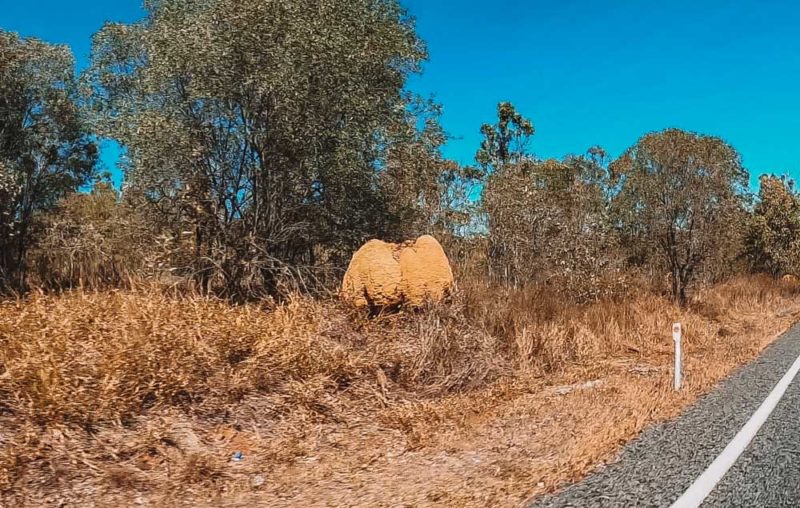

Other Things to do nearby?
If you’re exploring Litchfield National Park and Darwin, there’s so much more to see beyond the famous magnetic termite mounds. From stunning waterfalls and swimming holes to cultural experiences and coastal escapes, here are some of the top things to do nearby that make this region of the Northern Territory unforgettable.
- Florence Falls – A double-plunge waterfall surrounded by monsoon forest, Florence Falls is one of the most popular swimming spots in Litchfield.

- Wangi Falls – Another favourite, Wangi Falls offers year-round swimming (when safe), walking tracks, and a large picnic area.
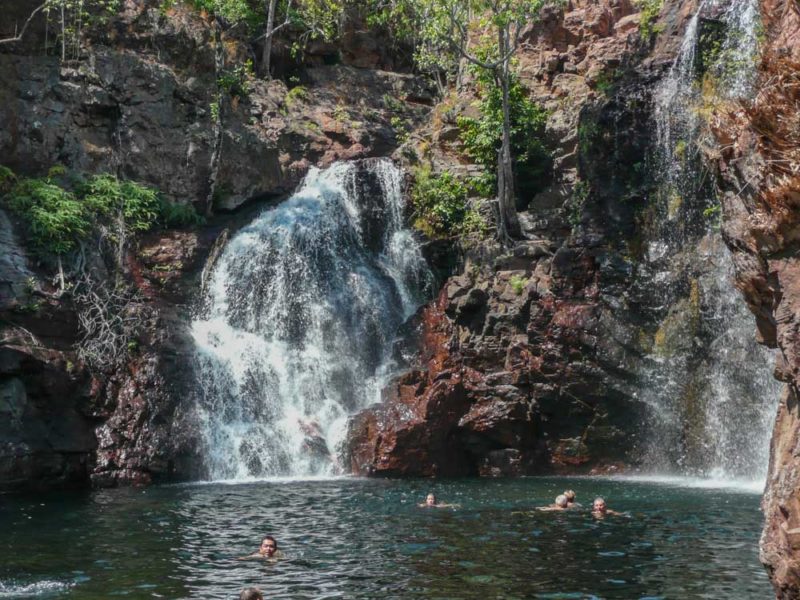
- Buley Rockholes – A series of cascading rock pools perfect for a refreshing dip. Locals love this spot for its shady setting and natural “spa” vibe.

- Berry Springs Nature Park – Closer to Darwin, Berry Springs features natural spring-fed pools shaded by lush forest.

- Tiwi Islands Day Trip – Just a short ferry or flight from Darwin, the Tiwi Islands offer a chance to experience Aboriginal culture, art, and island scenery. It’s often called the “Island of Smiles.”
- Mindil Beach Sunset Markets – One of Darwin’s most iconic experiences, the Mindil Markets (dry season only) combine food stalls, local crafts, live music, and incredible sunset views over the Arafura Sea.
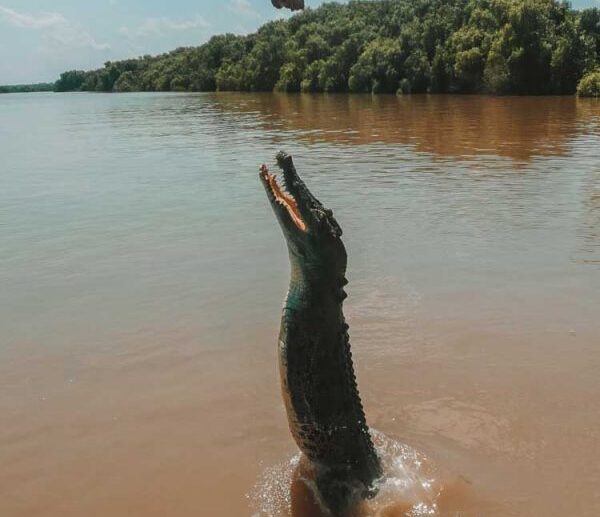
- Crocodile Spotting on the Adelaide River – Take a jumping crocodile cruise on the Adelaide River and see powerful saltwater crocodiles launch from the water.
- Darwin Waterfront Precinct – A lively area with a wave pool, lagoon, restaurants, and bars.
- Museum and Art Gallery of the Northern Territory (Free) – This museum in Darwin houses Indigenous art, maritime history, and natural science exhibits. Don’t miss “Sweetheart,” the famous 5-metre crocodile on display.
- Katherine and the Hot Springs – A bit further afield, Katherine is home to the Nitmiluk (Katherine Gorge) and the soothing Katherine Hot Springs.

Wrap up & Read More!
Thanks for reading this blog post today on the Magnetic Termite Mounds in Australia and I hope you found the information you were looking for. Although, If you’re still researching please delve deeper into Northern Territory blog information HERE for inspiration.


